If the Self Were Real, We Should Be Able to Find It.
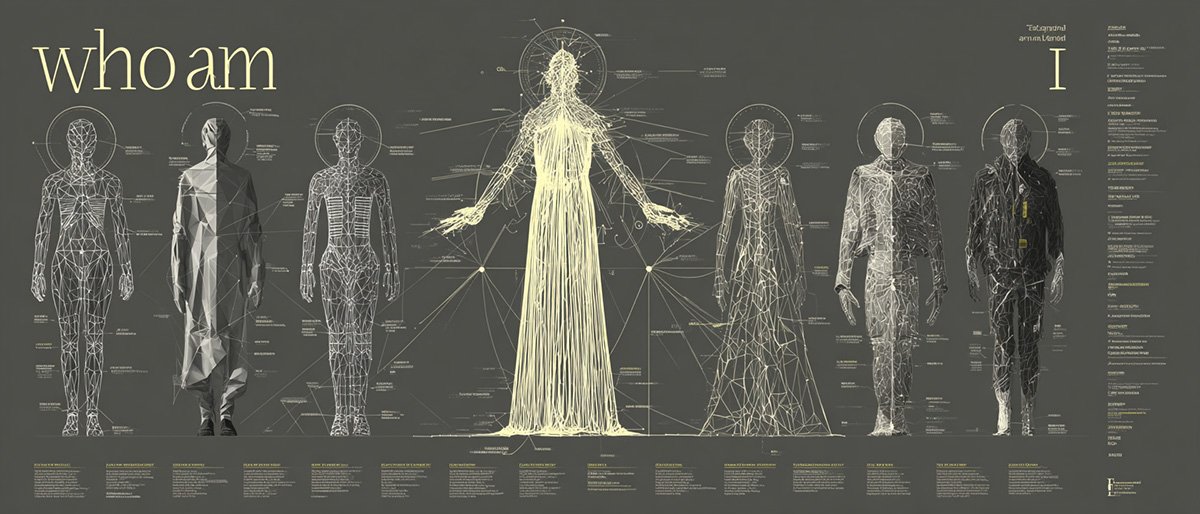
A simple investigation into the most taken-for-granted assumption.
After exploring stress, fear, and the assumption of separation, one question naturally remains:
What about the “self” itself?
Most people feel certain they are a self.
A someone.
An inner entity.
A thinker.
An experiencer.
A center behind experience.
This feeling seems undeniable.
But feeling certain is not the same as verifying.
So instead of debating what the self is, let’s ask something simpler:
If the self were real, where is it?
What People Usually Mean by “Self”.
When people say “I,” they often mean:
the body
the mind
thoughts
personality
memories
awareness
Let’s look at each, not philosophically, but experientially.
Is the Self the Body?
The body is made of many parts:
organs, cells, sensations, processes.
Which part is you?
If a finger is injured, are you less “you”?
If the body changes over time — as it clearly does — does the self change with it?
Or is the body something experienced,
rather than the experiencer itself?
Is the Self Thoughts?
Thoughts appear.
They linger briefly.
They disappear.
Can something that comes and goes be a permanent self?
And if you can notice a thought,
can that thought be you?
Is the Self the Mind?
The mind is a stream of mental activity:
images, words, memories, imagination.
But streams are not entities.
They are processes.
Can a process be a solid “someone”?
Is the Self Awareness?
Many conclude:
“I am the awareness behind experience.”
So let’s look.
Seeing and hearing are different.
Thinking and feeling are different.
Where is the same awareness located across all of them?
Is awareness found as a single, stable object?
Or is there simply experience happening — without a separate owner?
What Direct Observation Reveals.
When we look carefully:
A body is found.
Sensations are found.
Thoughts are found.
Feelings are found.
But a separate self — existing independently of these — is not found.
Not as an object.
Not as a location.
Not as a controller.
This doesn’t mean nothing exists.
It means what exists is experience.
Not an experiencer inside experience.
Why the Self Feels So Real.
The sense of self is constructed from:
memory
labeling
habit
language
Thought continuously says:
“I am doing this.”
“I am choosing.”
“I am experiencing.”
Repetition creates familiarity.
Familiarity creates belief.
Belief creates the feeling of reality.
But repetition is not proof.
The Function of the Self-Image.
The self-image helps the organism:
navigate
communicate
survive
It is a practical tool.
But tools are not entities.
Maps are not territories.
Labels are not things.
What Happens When the Self Is Questioned.
When the assumption of a separate self loosens:
Nothing dramatic may occur.
But something subtle changes.
Experience feels lighter.
Less personal.
Less tense.
Stress has less to defend.
Fear has less to protect.
Life continues.
But without an imagined center.
An Important Clarification.
This is not about eliminating the word “I.”
Language can still be used.
Functioning continues.
The only thing that changes
is the belief that “I” refers to an actual inner entity.
A Simple Experiment.
Right now, look for the self.
Not as a thought.
Not as a concept.
Look in direct experience.
Is a separate “me” found?
Or are there sensations, thoughts, and perceptions — but no owner of them?
Don’t conclude.
Just look.
The Implication.
Freedom does not come from becoming a better self.
It comes from seeing that the self you were trying to improve
was never an independent entity to begin with.
When misunderstanding ends,
simplicity remains.
A Final Note.
Our free apps, Mind Detox and Peace Booster, are designed to support this kind of gentle investigation —
not by giving answers, but by guiding direct observation.
The self doesn’t need to be destroyed.
It needs to be examined.